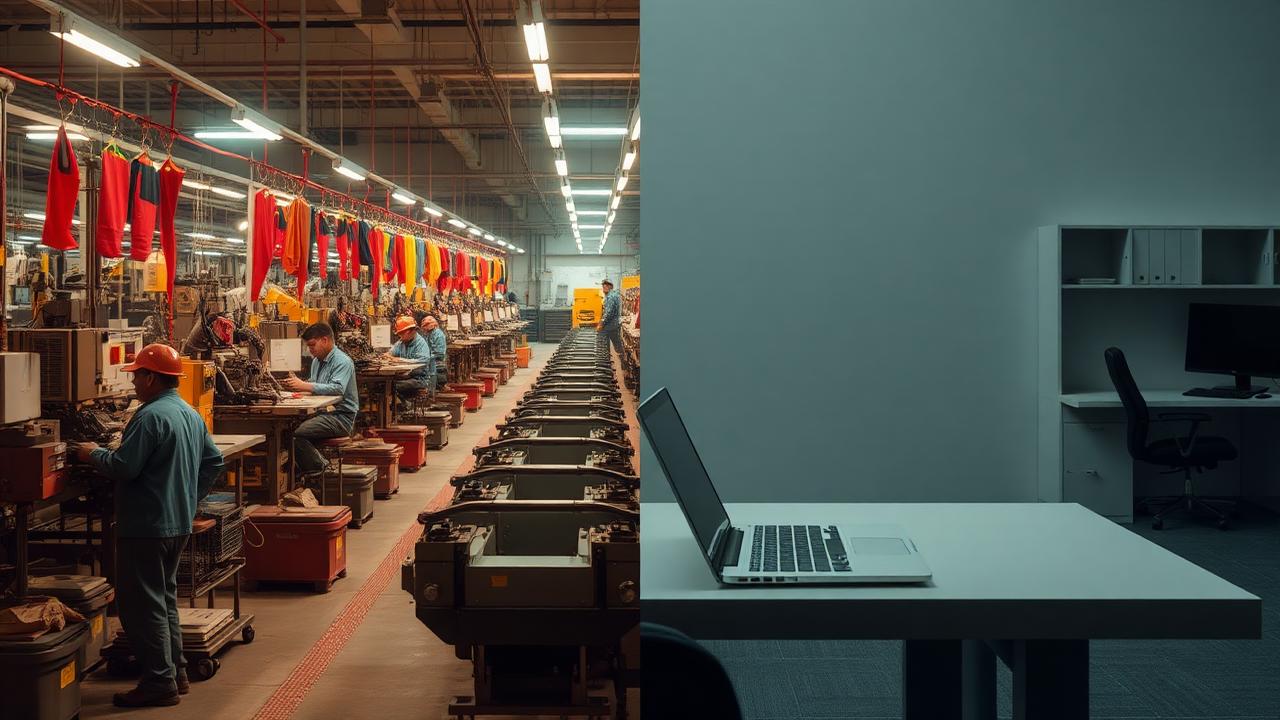
Real Factory or Trading Company? 10 Ways to Tell the Difference
A rough industry estimate: two-thirds of the suppliers you meet on Alibaba and other B2B platforms are trading companies, not factories. Trading companies aren't inherently bad — a good one can be genuinely useful for small orders or mixed categories. But you should always know which one you're dealing with, because the price, the quality control, and the accountability are all very different.
Here are ten checks that expose the difference within a few minutes.
1. Read the business scope on the licence
The single fastest tell. Every Chinese company's business licence lists an official 经营范围 (business scope). Real manufacturers have 生产 (production) or 制造 (manufacturing) in scope. Trading companies have 贸易 (trade), 商贸 (commercial trade), or 进出口 (import/export). It's public. It's on the licence. Ask for the licence.
2. Compare the company name to what they claim to sell
A company named "Shenzhen Yipin International Trading Co., Ltd" is a trading company — the word 贸易 (trade) is right there. Real factory names typically contain 电子 (electronics), 五金 (hardware), 塑胶 (plastics), 制造 (manufacturing), 工厂 (factory), or the specific product category.
3. Check the registered address against the product
Chinese manufacturing is intensely regional. Electronics: Shenzhen, Dongguan, Huizhou. Textiles: Zhejiang, Jiangsu. Furniture: Foshan, Dongguan. Small hardware: Yongkang. Ceramics: Chaozhou. Lighting: Zhongshan. A "factory" registered outside its natural cluster is usually a trading office fronting for actual factories elsewhere.
4. Look at the address on a satellite map
Copy the Chinese address into Baidu Maps or Amap (高德地图) and switch to satellite view. Real factories look like factories — big industrial buildings, loading bays, worker dormitories nearby, trucks in the yard. An office tower, a residential compound, or a small storefront is not a factory.
5. Ask for a VAT invoice sample
Chinese manufacturers issue VAT invoices (增值税发票) that show the specific goods they've sold. Ask for a redacted sample of a recent invoice. A real factory can send one within an hour. A trading company either refuses, sends a service invoice, or sends an invoice for goods the "factory" claims not to make.
6. Ask specific machinery questions on the first call
Real factory sales staff know their equipment. Middlemen don't. Try these:
- "What tonnage are your injection moulding machines, and how many do you have?"
- "What's the model of your CNC machining centres?"
- "How many sewing lines do you run, and what brand of machines?"
Real answers come in under 30 seconds. Trading-company answers come after "let me check with the technical team."
7. Ask their registered monthly production capacity
Real factories have a legal, registered production capacity on file with the local authorities. They quote it in units per month or units per shift, tied to specific product lines. Trading companies quote a vague "we can do 100,000 pieces a month" that doesn't tie to any specific line.
8. Insist on a live video call from the production floor
Not a pre-recorded factory tour. Not photos. A live WeChat or Zoom call, this week, with your product visible on the line and the person on camera pointing the phone at whatever you ask. This is the highest-signal test on the list. Middlemen almost never pass, and when they agree, the "factory" often turns out to be a workshop they rent by the day.
9. Cross-check on 1688.com
1688 is Alibaba's domestic Chinese platform, where real factories sell to Chinese buyers in Mandarin. A real manufacturer usually has a 1688 profile showing the same products at Chinese domestic prices. If the "manufacturer" has no 1688 presence, or their 1688 listings show completely different products, they're a trading company using an Alibaba shopfront.
10. Check the export records
Chinese customs data (available through ImportGenius, Panjiva, or 52wmb) shows every export shipment by company. Real manufacturers have consistent multi-year records under their own name in their claimed product category. Trading companies show thin, scattered records — or nothing under their own name because they export under someone else's licence.
When a trading company is actually fine
Not every project needs a direct factory relationship. Small orders under $10,000, mixed-category shopping carts, and first-time exploration of a new category are often better served by a competent trading company that already has factory relationships. The problem isn't middlemen — it's paying factory-direct prices to a middleman without knowing it, and trusting quality control to someone whose incentive is to close the deal, not catch defects.
The rule of thumb
If you know they're a trading company, and you're OK with a 10–20% margin on top of factory pricing in exchange for coordination, that's a real service. If you think they're a factory and they're not, you're overpaying and your QC is running through someone with no leverage over the actual manufacturer. The verification is what makes the difference — not the label they gave themselves.